The woman across the room sobbed for twenty minutes straight. You heard it through your headphones. You felt nothing. You left wondering if your session worked.
It did.
Somewhere along the way, breathwork got a reputation. The deeper you go, the harder you cry. The louder you scream, the more you released. If you didn't have a big emotional moment, you didn't do it right.
That is not how this works.
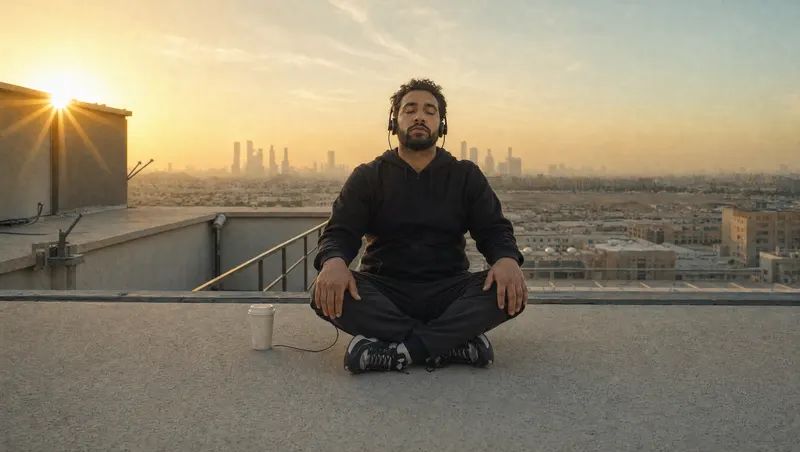
Release does not always look like drama. Often it looks like nothing at all from the outside. A quiet settling. A tightness in the chest that has been there for months, gone. A heaviness that lifts without fanfare.
The body does not perform for you. It does what it needs to do.
The session that looks like nothing
Say someone comes to a session carrying years of suppressed anger. Their body has been bracing against it their whole life. Tight shoulders. Clenched jaw. A constant low-grade tension they stopped noticing because it became normal.
During the session, they do not scream. They do not punch the floor. They breathe, and halfway through, the tightness in their shoulders releases. The jaw unclenches. The body softens in a way it has not done in years.
From the outside, it looks like they are just lying there. From the inside, something foundational has shifted.
They leave feeling lighter. Calmer. More like themselves. And because they did not cry or shake or make a sound, they wonder if they did it wrong.
They did not do it wrong. They did exactly what their body needed.
Catharsis is not the same as resolution
Crying, shaking, screaming, these are valid responses. When they happen, they are real. The body is moving something that has been stuck.
But catharsis is not the goal. Resolution is.
Catharsis is the surface. The big release, the dramatic moment, the thing you can see and hear. Resolution is what happens underneath. When the nervous system actually settles. When the body learns, on a felt level, that it is safe to feel what it just felt. When the emotion finishes its arc instead of staying frozen halfway through.
You can have catharsis without resolution. Crying that does not land. Anger that fires up and then gets stuffed back down. A big emotional moment that leaves you wired, not settled.
You can also have resolution without catharsis. No tears. No shaking. Just a quiet shift in the body that stays with you for weeks.
IMD is designed for resolution. The catharsis, if it comes, is welcome. But it is not the measure of whether the session worked.
What actually matters
What matters is what you feel when you leave.
Do you feel lighter? Calmer? More settled in your body? Is the tightness in your chest gone? Can you take a full breath without your shoulders rising? Is your heart rate slower? Is the mental noise quieter?
That is the work. That is what lasts.
The crying is just one way the body moves stuck emotion. Shaking is another. Going very still is another. Laughing is another. Feeling nothing obvious during the session and then noticing, three days later, that the thing that always set you off does not land the same way anymore, that is another.
All of these are valid. None of them is better than the others.
Why people think crying means it worked
Because crying is visible. It is dramatic. It feels significant in the moment. And if you have spent years not crying, finally crying can feel like proof that something real happened.
It is proof. But it is not the only proof.
The belief that crying equals depth comes from two places. One is cultural. We have been taught that big emotions mean real emotions. That if you are not visibly moved, you are not actually moved.
The other is the way a lot of breathwork has been marketed. Sessions sold on the promise of a breakthrough. Photos of people mid-sob, captions about finally letting it all out. The message, intentional or not, is that the dramatic moment is the point.
It is not the point. It is one possible outcome of the point.
The point is helping the body finish what it started years ago. Sometimes that looks like sobbing. Sometimes it looks like lying very still while something deep inside you unknots.
What happens when you chase the catharsis
If you walk into a session expecting to cry, and you do not cry, you will think the session failed. You will leave disappointed. You will miss the actual shifts happening in your body because you are measuring against the wrong thing.
Worse, you might try to force it. Push yourself toward the big moment because you think that is what release is supposed to look like. That does not help. The body cannot be performed into letting go.
Release happens when the body feels safe enough to let something move. It does not happen because you decided it should happen now, in this dramatic way, so you have something to tell people about later.
The sessions people remember most are not always the loud ones
I've run sessions in Dubai, Riyadh, Singapore, Mumbai, Muscat, Sri-Lanka and more. The sessions people come back to talk about months later are not always the ones where they sobbed for an hour.
Often, it is the quiet ones. The session where nothing obvious happened, but they drove home without that knot in their stomach for the first time in months. The one where they slept through the night. The one where, two weeks later, they realised they had stopped bracing every time someone raised their voice.
Those shifts do not look like much in the room. They look like everything in the weeks that follow.
Judge your session by how you feel after, not during
If you cried, and you left feeling lighter and settled, good. The crying helped.
If you did not cry, and you left feeling lighter and settled, also good. The body released without needing the visible drama.
If you cried, and you left feeling wired and unsettled, that was catharsis without resolution. It moved, but it did not land.
If you did not cry, and you left feeling nothing different at all, maybe the session did not reach what needed moving that day. Or maybe it did, and the shift will show up later in a way you do not recognise yet.
The measure is not the crying. The measure is whether your nervous system settled. Whether the body feels different. Whether the tightness, the bracing, the reactivity, whether any of that has softened.
That is what lasts. That is what changes your life in small, daily ways over the course of weeks.
Your body knows what it needs
Some sessions, you will cry. Some sessions, you will shake. Some sessions, you will go very still and quiet while something deep inside you shifts. Some sessions, nothing obvious will happen, and three days later you will notice you are different.
All of these are the session working.
Trust what your body does. It is not performing for the room. It is not trying to give you a story to tell. It is doing exactly what it needs to do to release what it has been holding.
The work is not the crying. The work is the settling. The resolution. The body learning it is safe to feel, and then actually feeling it, and then letting it go.
Sometimes that is loud. Often it is quiet. Both matter. Both last.