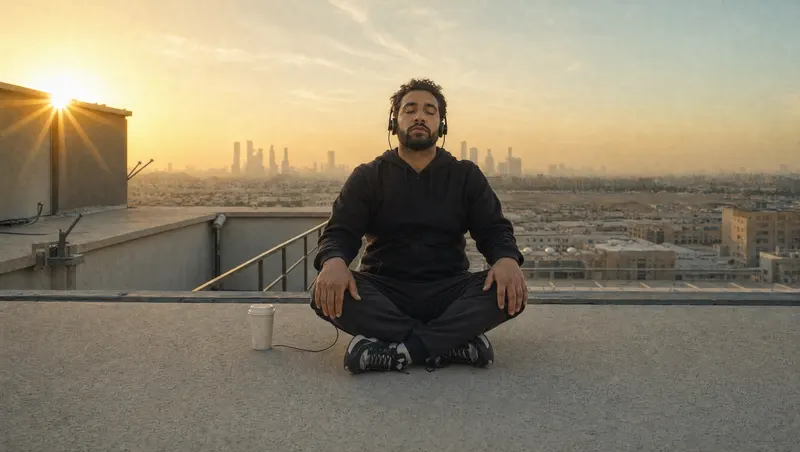
Most people think they already know how to breathe. You do it all day without thinking about it, so the idea that someone might teach you something new about your own breath sounds odd at best.
But breathing in a specific way, on purpose, for a sustained period of time, shifts your body's chemistry. And when the chemistry shifts, things that have been stuck in your body for years get a route out.
That is what breathwork is. Not meditation. Not breathing exercises you do for two minutes to calm down. A full session of deliberate breathing that works with your body directly to release what it has been holding.
What happens in a breathwork session
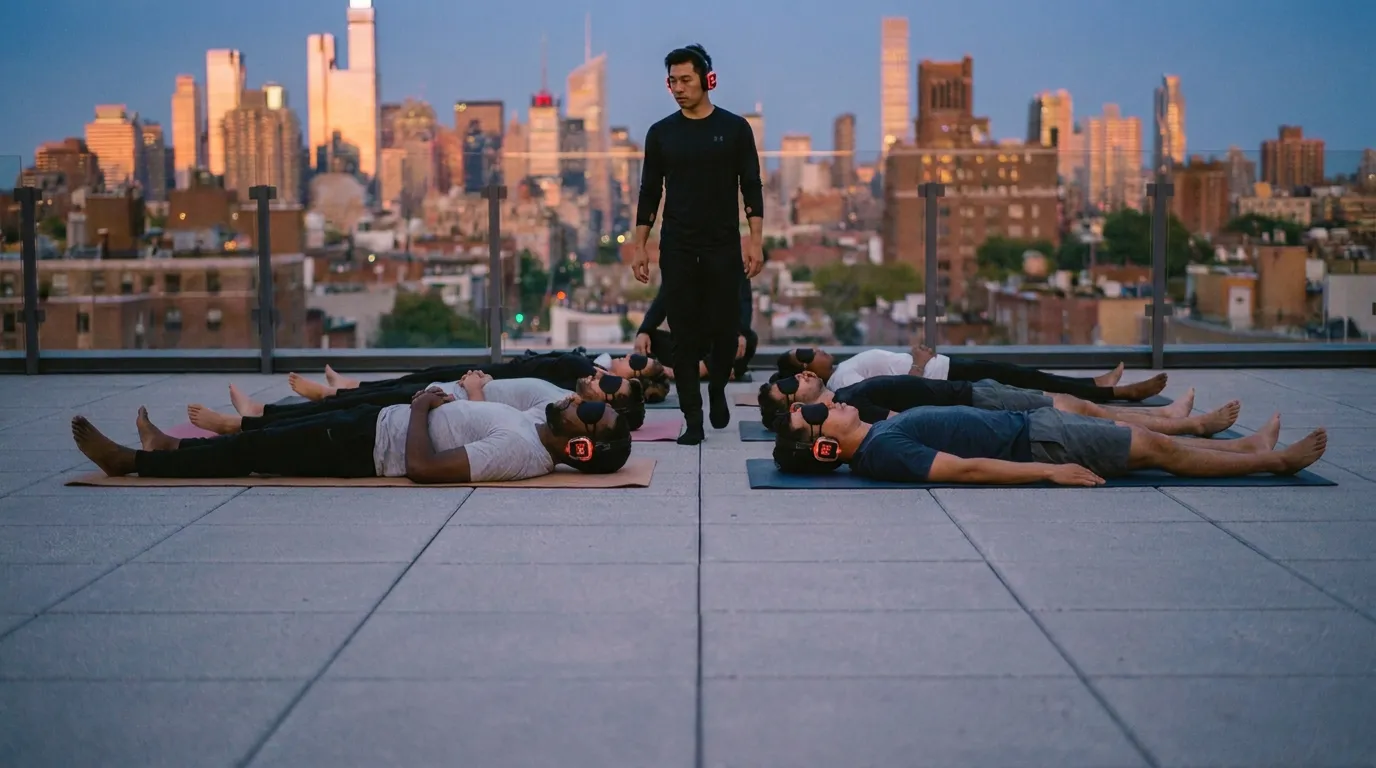
You lie down on a mat. You put on headphones and an eye mask. A trained facilitator guides you through the breath and holds the room the whole time.
The breath itself is continuous, no pause between inhale and exhale. This pattern is called conscious connected breathing. You breathe in through the mouth, out through the mouth, at a rhythm faster than your resting breath but not so fast that you hyperventilate.
You do this for around an hour, sometimes longer depending on the session format. The music in your headphones is not background. It is designed to work alongside the breath, to drop you out of your thinking mind and into the part of your unconscious where stuck emotion actually lives.
What you feel during the session varies. Some people cry. Some laugh. Some shake. Some go quiet. Some feel tightness in their chest that eventually loosens. Some feel anger move through their arms and shoulders. Some feel nothing dramatic at all, just a slow softening.
Whatever needs to move, moves. You do not have to make anything happen. The breath does the work.
Why the breath works this way
Conscious connected breathing changes the balance of oxygen and carbon dioxide in your blood. This quiets the thinking part of your brain, the prefrontal cortex, while leaving the emotional part, the limbic system, active.
Emotions you never fully processed, things you had to push down because there was no time or space or safety to feel them when they happened, get stored in the body. Trauma research from people like Bessel van der Kolk and Peter Levine has shown this clearly. The body keeps the score.
To move what is stuck, you have to work with the body directly. Thinking about it, talking about it, understanding it, these help. But understanding does not shift the thing out of your tissues. The body has to actually process it, and that takes a body-based route.
The breath is that route. It gives stuck emotion permission to surface and a way out of the body without you having to figure anything out or narrate your life story to a room full of strangers.
What people feel afterwards
Most people leave a session feeling lighter. Like something has physically moved out of the body. Some describe it as space where there used to be weight.
Calmer. Less reactive. Less braced for the next thing to go wrong.
Clearer. The mental noise quiets. Easier to think straight, easier to say what you actually mean.
More connected to your body. Less numb, more present, able to feel sensations you had not felt in years.
Settled. Breath and heart rate slow, shoulders drop, jaw unclenches.
Grounded. The opposite of dissociation. Steady, not floaty.
Many people notice shifts in the days and weeks that follow. Things that used to set them off do not land the same way. The charge comes off. Behaviours that used to feel forced get easier. The inner critic gets softer.
What breathwork is not
Breathwork is not meditation. You are not watching your thoughts. You are not cultivating stillness. You are activating the body in a specific way to let stuck emotion move.
It is not therapy. You do not talk through your past. You do not analyse what happened to you or why. The breath works below the level of language.
It is not relaxation. During the active part of the session, your body is working. Your heart rate rises. You might feel heat, tingling, tension in your hands or face. This is normal and part of the process. The deep relaxation comes after, in the integration phase.
It is not a quick fix. One session can create a real shift. Many people feel noticeably different after their first session. But the deeper work happens over time, with repeated sessions. The body learns it is safe to feel what it has been holding, and more layers come up.
Who should not do breathwork
Conscious connected breathing is powerful work, and it is not safe for everyone.
If you are pregnant, do not do this kind of breathwork. The breath pattern changes your body's chemistry in ways that are not suitable during pregnancy.
If you have cardiovascular conditions, heart disease, or a history of heart attack or stroke, conscious connected breathing is not safe for you. The breath raises your heart rate and blood pressure during the session.
If you have epilepsy or a seizure disorder, do not do this work. The combination of breath, sound, and the shift in blood chemistry can trigger seizures in susceptible people.
If you have severe mental health conditions, particularly uncontrolled bipolar disorder or schizophrenia, conscious connected breathing can destabilise you. The work brings up a lot, and if your system is not stable enough to hold it, that is not safe.
If you are on heavy psychiatric medication, particularly benzodiazepines or antipsychotics, check with your prescribing doctor before doing breathwork. The breath works with your nervous system in ways that can interact with medication.
If you have severe asthma or other serious respiratory conditions, conscious connected breathing may not be safe. The breath pattern is sustained and continuous, and if your lungs cannot support that, do not do it.
If you are detoxing from alcohol or substances, wait until you are stable. Breathwork can bring up intense physical and emotional sensations, and your system needs to be steady enough to process them.
This is not an exhaustive list. If you have any medical condition that affects your heart, lungs, brain, or nervous system, get clearance from your doctor before doing breathwork. A responsible facilitator will screen you for contraindications before you join a session.
What to expect if you try it
Your first session will likely feel unfamiliar. The breath pattern takes a few minutes to settle into. Your hands and face might tingle. Your jaw might feel tight. This is normal and temporary.
You might cry, or you might not. You might feel anger, grief, fear, or something you do not have a name for. You might feel nothing dramatic at all, just a slow unwinding.
Whatever happens is what needed to happen. There is no right way to do a breathwork session. The body knows what it is holding, and the breath gives it permission to move at its own pace.
After the session, give yourself time. Do not rush back into your day. Drink water. Eat something grounding. Sleep well that night. The work continues working after you leave the room.
Breathwork is not for everyone, and it does not replace other work you might be doing. Many people do breathwork alongside therapy, or medication, or other practices. It is one tool, not the only tool.
But for people who feel something stuck in their body that thinking has not shifted, breathwork offers a direct route to release. No talking. No analysing. Just the breath, the body, and what has been waiting to move.