
Most people think breathwork is about relaxing. Deep breaths, calm down, lower your stress.
That's one kind. But there's another kind that does something completely different.
The breathwork I run at IMD is designed to help the body release emotions it has been holding for years. Not manage them. Not think about them. Release them.
This article explains what breathwork actually is, how the different kinds work, and why the body-based kind creates shifts that thinking-based work often can't.
What breathwork is
Breathwork is any intentional breathing pattern used to shift how the body feels or functions.
Some patterns calm the nervous system. Some sharpen focus. Some help the body process and release stuck emotion.
The breath you use determines the work the body does.
Most people know the calming kind. Slow breathing before bed. Box breathing to settle after a hard day. Those work by activating the part of the nervous system that tells the body it is safe to rest.
The release kind works differently. It uses a continuous breath pattern with no pause between inhale and exhale. This shifts the body's chemistry in a way that quiets the thinking part of the brain and brings unconscious material to the surface.
Both are real work. Different goals, different breath.
How the calming kind works
When you breathe slowly with a longer exhale than inhale, you activate the vagus nerve. This is the main nerve of the parasympathetic nervous system, the part that tells the body to settle.
Your heart rate slows. Your blood pressure drops. The body moves out of fight-or-flight mode and into rest-and-digest.
This kind of breathwork is good for moments when the body is running hot. When you are wired, overwhelmed, or stuck in a loop of stress. A few minutes of slow breath can bring the nervous system back to baseline.
The IMD app includes 40-minute sessions built around this kind of breath. They are called Relax & Restore, and they use three slow techniques: the 4-8 breath, box breath and 4-7-8. All designed to soothe the body and quiet the mind.
This is not release work. It is regulation. It helps you shift how you feel today.
How the release kind works
The breathwork sessions I run in person use a continuous breathing pattern called conscious connected breathing. No pause between inhale and exhale. Continuous, for around an hour.
This does something completely different to slow breath.
When you breathe this way, the body's oxygen and carbon dioxide levels shift. The thinking part of the brain quiets. The emotional part stays active. This creates a state where stored emotion can surface without the thinking mind blocking it or talking you out of feeling it.
Emotions you never fully felt at the time, grief you never cried, anger you were never allowed to express, fear from something that happened when you were too young to make sense of it. The body has been holding all of it.
Conscious connected breathing gives that emotion a route out.
People cry. People shake. People laugh. People hold tension and then let it go. Whatever needs to move, moves.
This is not about forcing anything. The breath does the work. The facilitator holds the room. The music, the timing, the arc of the session are all designed to keep the body safe while it releases.
Why breathwork works when other things don't
Most tools for emotional wellbeing work through the mind. Therapy uses words. Mindfulness uses attention. Journaling uses writing.
These do real work, and many people who come to IMD have done years of it. But there is another layer underneath the thinking mind: what the body is holding.
Trauma research has shown that unprocessed emotion lives in the body, not just in memory or thought. To move it, you have to work with the body directly.
Breathwork is one of the most direct ways to do that. It bypasses the thinking mind and works with the nervous system, the part of you that stores the unfinished emotional responses.
Say someone lost a parent when they were 12. At the time, they might have been told to be strong, to hold it together, to not make it harder for everyone else. So the grief froze mid-arc. The body never got to cry it all the way through.
30 years later, that grief is still in there. Talking about it helps. Understanding it helps. But the body still needs to finish the arc it never got to complete.
Breathwork gives it that chance.
The difference between the two kinds
Calming breathwork settles the body. It brings you back to baseline when stress has pushed you too far out. Good for daily life, safe to do on your own, works in 10 or 40 minutes.
Release breathwork moves what the body has been holding. It is deeper work, and it needs to be done in person with a trained facilitator. The breath is continuous and active. The session is structured. The room is held.
Both matter. Many people use both. Calming breath for the moments in between. Release work for the stuck emotion underneath.
What happens in an IMD session
IMD runs two kinds of in-person breathwork sessions: Signature (2 hours, two rounds of breath) and Lite (1 hour, one round of breath). Both use the same method. Signature gives the body more time to go deeper.
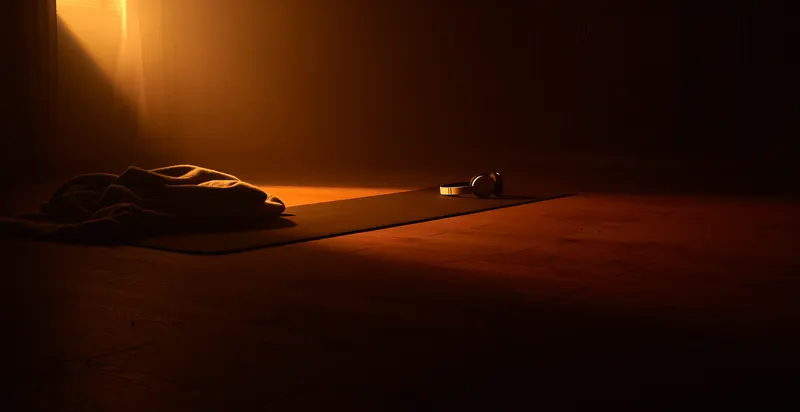
You lie down, put on headphones and an eye mask, and breathe in the continuous pattern. A custom-built soundscape carries you through the session. The music is not background. It is designed to do work, using layered sound, low-frequency tones and rhythm shifts to drop you out of everyday thinking states and into the unconscious, where the stuck emotion lives.
The session follows a deliberate arc: beginning, peak, return. What comes up has time to move. What moves has time to settle.
The last 20 minutes are called the IMD Landing. The breath shifts back to natural. The music softens. You are guided through two visualisations. This is when the body integrates what just moved.
Most people leave feeling lighter, calmer and clearer. Many notice their lives shifting in small daily moments over the weeks that follow. Things that used to set them off do not land the same way. Behaviours that used to feel forced get easier.
What breathwork is not
Breathwork is not meditation. Meditation works with attention. Breathwork works with the body's chemistry.
It is not therapy. Therapy works through talking. Breathwork works through the nervous system.
It is not a replacement for either. Many people do breathwork alongside therapy, mindfulness and other practices. The work layers.
And breathwork is not magic. It is physiology. The breath changes how the body functions in measurable, repeatable ways. The shifts people feel are real because the work the body is doing is real.
Where to start
If you want to try calming breathwork, the IMD app is a good place. The 10-minute Morning Boost is free forever. The 40-minute Relax & Restore sessions are designed to settle the nervous system and leave you properly calm.
If you want to do the deeper release work, that happens in person. IMD Lite is a focused 1-hour session, good if you are new or short on time. IMD Signature is the full 2-hour experience, with two rounds of breath and more room for the body to go deeper.
No prior experience needed. The sessions are fully guided from start to finish.
Breathwork meets you where the other work stops. It gives the body a way to finish what it started years ago and never got to complete.