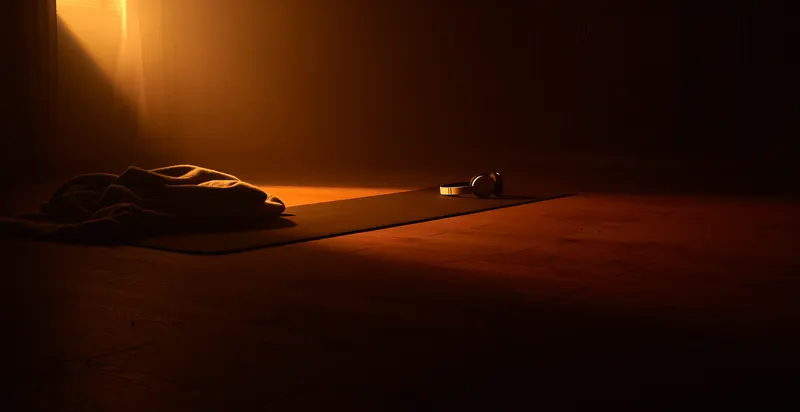

Your calendar may look manageable. Your body disagrees.
Burnout recovery through guided breathing begins with that distinction. Burnout is not always a dramatic collapse or an inability to get out of bed. Often, it is the slower experience of replying to messages when you have nothing left to give, lying down exhausted but unable to switch off, or feeling strangely flat in moments that should matter. You understand that you need a break. Yet your system does not know how to take one.
You cannot think your way out of a body that has spent months, or years, preparing for the next demand. Recovery needs more than insight. It needs a felt signal of safety.
Burnout is a nervous system problem, not a personal failure
Burnout develops when pressure becomes constant and recovery becomes conditional. You tell yourself you will rest after the deadline, after the launch, after the difficult conversation, after everyone else is okay. The finish line moves. Your body keeps the score.
In the early stages, stress can feel productive. You move quickly, solve problems, stay available and push through tiredness. Stress hormones help you meet the moment. But a nervous system cannot stay mobilised indefinitely without a cost.
Eventually, the signs become harder to ignore. Sleep becomes lighter or more fractured. Your attention scatters. Small decisions feel disproportionately difficult. You may become more irritable, more withdrawn, or emotionally numb. Some people feel wired and restless. Others feel shut down and unable to begin.
Neither response means you are weak. They are different protective states. The body is trying to manage a load it has carried for too long.
This is why generic advice to simply take a day off can fall short. Time away from work matters, but it does not automatically change the pattern of internal alarm. If you spend your weekend scrolling, worrying, catching up on life admin or replaying conversations, your body may never receive the message that the threat has passed.
Why guided breathing can support burnout recovery
Breathing is one of the few body processes that happens automatically but can also be consciously influenced. That gives it unusual power. A structured breathing practice can change the pace, depth and rhythm of your breath, which can influence how activated or settled you feel in the moment.
The goal is not to force calm or perform relaxation correctly. It is to create enough space for your body to come out of relentless anticipation. With skilful guidance, breath becomes an anchor when your thoughts are racing and a route back into sensation when you have become disconnected from yourself.
That matters because burnout often lives below the level of language. You may know exactly why you are stressed. You may have talked about it at length. Yet your jaw is still clenched, your chest still tight and your sleep still interrupted. Understanding is valuable. But it is not always the same as release.
A guided session offers structure when your capacity is low. You do not have to decide what technique to use, how long to practise or whether you are doing it right. You follow clear instruction, supported by sound and pacing designed to hold your attention. For someone who is burnt out, that reduction in decision-making is not a small detail. It is part of the relief.
The difference between distraction and a real reset
Distraction has its place. A series, a drink with friends or an evening without notifications can give your mind a break. But distraction can also leave the underlying stress response untouched. You return to the same tight chest, the same shallow breathing, the same sense that your whole life is waiting for you.
A real reset is different. It is not about escaping your life. It is about helping your system meet it without remaining permanently braced.
Guided breathing may bring a noticeable shift in a single session: warmth in the body, a softer face, tears, a calmer mind or a deep sense of tiredness. Sometimes the shift is subtle. You realise later that you responded less sharply, slept more deeply or made one decision without spiralling.
Do not measure recovery only by intensity. The most meaningful sign may be that you can finally feel what is there without being overwhelmed by it.
What burnout recovery through guided breathing can look like
There is no single formula, because burnout is rarely caused by one thing. Work pressure may be part of it, but so can caregiving, grief, relationship strain, financial fear or years of being the person who holds everything together. The practice needs to meet the person, not force the person into a fixed outcome.
For some, short guided sessions are the most realistic starting point. Ten minutes before work can interrupt the habit of beginning the day in urgency. A session after the commute can mark a boundary between work and home. A slower practice before bed can help create conditions for rest, even if sleep does not arrive immediately.
For others, a longer, immersive experience is more appropriate. When the body has been holding a lot, a focused space can make room for emotions that have been postponed by necessity. Music, breath and careful facilitation can help you stay present as that pressure moves. This is not about chasing a dramatic breakthrough. It is about giving your body a contained opportunity to complete what it has not had space to process.
IMD Breathwork is built around this principle: a consistent, trauma-informed experience where breath and cinematic sound work together to move stress out of the body, not merely explain it.
Start smaller than your ambition
Burnout can make people swing between two extremes: doing nothing because everything feels too hard, or turning recovery into another demanding project. Neither is necessary.
Begin with a practice you can repeat. Choose a guided session that feels manageable, then pay attention to what happens afterwards. Are you more settled, more alert or more emotional? Do you feel grounded, or do you need extra quiet and hydration? Your response is useful information.
Consistency matters more than intensity. A brief practice several times a week may be more supportive than one powerful session followed by another month of running on fumes. At the same time, there are periods when a deeper experience can be exactly what breaks the pattern. It depends on your capacity, your history and what support you have around you.
Breathwork is not a substitute for practical change. If workload, conflict or impossible expectations are driving your burnout, those conditions deserve attention too. Guided breathing can help you access the clarity and steadiness required to set boundaries, ask for help or make a difficult decision. It cannot make an unsustainable life sustainable on its own.
Safety is part of the experience
Breath can bring emotion to the surface. That is one reason skilled facilitation matters. A well-held session does not demand catharsis, push you beyond your limits or treat intensity as proof that something worked. You remain in charge of your own experience.
If you are pregnant, have a cardiovascular, respiratory or neurological condition, have a history of seizures, or are managing significant mental health symptoms, seek appropriate clinical guidance before trying intensive breathwork. The same applies if you are unsure whether a particular style is right for you. Slower, gentler breathing may be a better place to begin.
And if difficult feelings arise, that does not mean you have failed at recovery. It may mean your body has stopped postponing what it needs you to notice. Go slowly. Choose support. Let the practice be one part of a wider care plan, not another demand to meet perfectly.
Your body needs evidence that the pressure has eased
Burnout recovery is not always visible from the outside. It can look like pausing before you answer. It can look like feeling tired enough to rest instead of tired enough to keep pushing. It can look like having one honest conversation, taking one proper lunch break or noticing that your breath has reached your belly for the first time in weeks.
Those are not small wins. They are evidence that your system is learning a different rhythm.
You have carried enough through force. Let recovery become something your body can actually feel.