Most people breathe without thinking about it. In, out, pause. In, out, pause. That pause is normal. It's automatic. And for most of everyday life, it's exactly what the body needs.
Conscious connected breathwork removes that pause.
You breathe in a continuous pattern. No break between the inhale and the exhale. No gap. Just breath moving through the body, over and over, for however long the session runs.
That one change shifts everything.
What conscious connected breathing actually does
When you breathe this way for more than a few minutes, your body's chemistry starts to change.
The continuous breath shifts the balance of oxygen and carbon dioxide in your blood. Carbon dioxide drops. The blood becomes slightly more alkaline. Your heart rate changes. Blood flow to certain parts of the brain reduces.
This is not dangerous. It's deliberate. And it does something specific: it quiets the part of your brain that thinks, plans, analyses and controls. The prefrontal cortex, the bit that keeps you making sense of the world, gets less fuel. It steps back.
At the same time, the emotional brain stays active. The limbic system, where memories and feelings are stored, keeps running. In fact, it gets louder.
So you end up in a state where the thinking mind is quiet and the emotional brain can surface what it's been holding. Emotions that were stuck, suppressed, or never fully processed now have a route out.
You don't have to think your way to them. You don't have to talk through your story or figure anything out. The breath does the work. The body just responds.
Why the body holds emotion in the first place
Emotions are meant to move through the body in the moment they arise. Anger pushes you to fight or set a boundary. Fear gets you out of danger. Grief lets you release what's been lost.
But most of the time, emotions don't get to finish their arc.
You were told not to cry. You couldn't be angry at the person who hurt you. You were too young, too overwhelmed, or too alone to feel the fear all the way through. So the emotion froze mid-arc, and the body held it.
Years later, it's still there. Not in your thoughts. In your body. In the tightness in your chest. The knot in your stomach. The tension in your jaw. The numbness you can't explain.
Conscious connected breathing gives those stuck emotions a way out.
What happens during a session
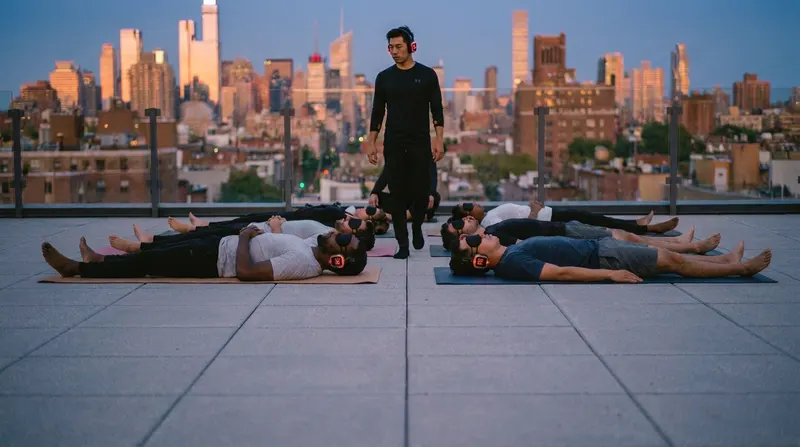
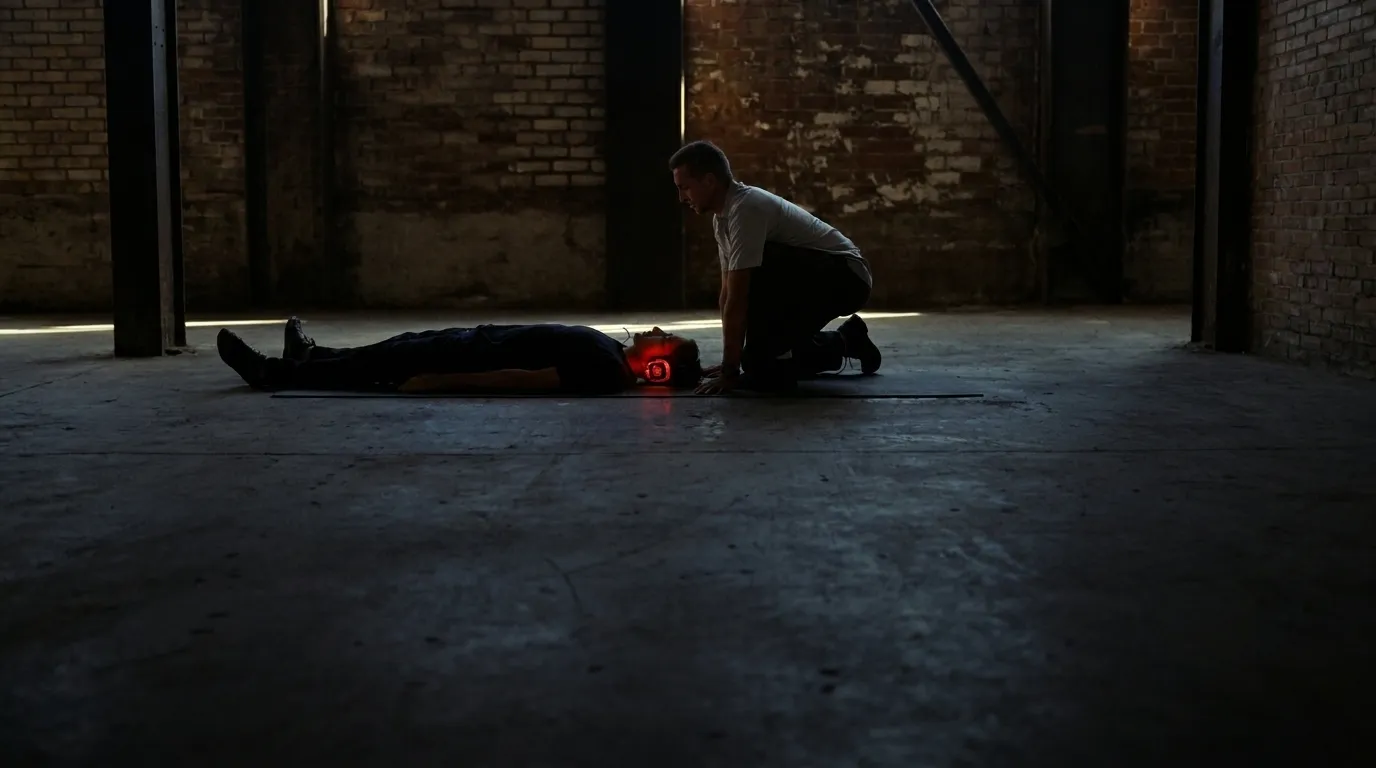
You lie down. Headphones on, eye mask on. A trained facilitator guides you through the breath and holds the room.
The breath is continuous. In through the nose or mouth, out through the mouth, no pause. At first it feels active, almost like exercise. Then the body settles into the rhythm and it becomes less about effort and more about letting go.
The soundscape does as much work as the breath. Custom-built music, layered with frequencies and tones, guides the body through different states. It's not background. It's doing the job of taking you below the thinking mind.
As the session builds, things start to surface. Some people cry. Some shake. Some laugh. Some feel heat or cold or tingling in their hands and feet. Some go completely still and quiet.
Whatever needs to move, moves. The body decides. You don't have to perform or make anything happen.
Then the session peaks. The breath, the music, and whatever has come up reach their highest point. And then it all starts to come back down.
The last 20 minutes are the most important. The breath softens. The music shifts. You're guided through two visualisations. This is when integration happens. When the body learns, on a felt level, that it's safe to feel what it just felt. When the release actually lands.
People leave feeling lighter. Calmer. Clearer. More like themselves.
How conscious connected breathing is different from other breath techniques
There are dozens of breathwork techniques. Box breath, 4 7 8, alternate nostril, Wim Hof, holotropic. They all do different things.
Some calm the body. Some energise it. Some help you focus. Some help you sleep.
Conscious connected breathing is in a different category. It's not designed to regulate how you feel in the moment. It's designed to release what's been stuck for years.
The continuous pattern, the lack of pause, the length of time you stay in it. That combination shifts the body's chemistry in a way that lets suppressed emotion surface and move out.
It's active work. It's not gentle. But it's held, safe, and designed so the body can do what it's been needing to do for a long time.
Why it works when talking doesn't
Most tools for emotional wellbeing work through the mind. Therapy uses words. Mindfulness uses attention. Journaling uses writing.
These do real work. Many people who come to IMD have done years of it.
But there's a layer underneath the thinking mind. What the body is holding. And to move that, you have to work with the body directly.
Trauma research from people like Bessel van der Kolk and Peter Levine has shown that unprocessed emotion lives in the body, not just in memory or thought. The nervous system holds the pattern. The tissues hold the tension. The survival response that never got to complete stays frozen in the body's memory.
Talking about it helps you understand it. Conscious connected breathing helps you move it.
What makes it safe
Conscious connected breathing is powerful. That's why it's done in person, in a held space, with a trained facilitator in the room.
The session is designed end to end. The briefing explains what's about to happen. Contraindications are checked. The music is built to support the natural arc of how emotions move through the body. The facilitator watches, holds, and supports people through difficult moments without making them perform or rush.
And the integration at the end, the 20 minutes where everything settles, is what makes the change last. Without that, a release can feel destabilising. With it, people leave grounded and complete.
This is not something to do on your own at home from a recording. Real release work needs a real room, a real person holding it, and other bodies nearby. That's what makes it safe.
Who it's for
Conscious connected breathwork is for people who feel something stuck and want to do real work on it.
Some have done years of therapy and reached the limit of what thinking-based work can do. Others are newer to inner work and looking for something that creates a lasting shift.
Both groups share this: they want body-based work, not more talking.
It's for the person who feels a tightness in their chest they can't explain. The one who snaps at the people closest to them and doesn't know why. The one who's tired in a way sleep doesn't fix. The one who reacts bigger than the situation calls for. The one who feels disconnected from themselves and wants to come back.
If that's you, conscious connected breathing might be the work.