Most breathwork classes hand you a cushion, tell you to close your eyes, and ask you to follow the breath. The room is bright. People fidget. The music is Spotify. Your mind wanders halfway through.
That is not immersive breathwork.
Immersive breathwork means the experience is designed to remove everything that keeps you in your head, so the body can do the work it came to do.
What immersive actually means
Immersive means you drop into the experience completely. Nothing pulls you out. No visual distraction, no social awareness, no decision-making about what to do next.
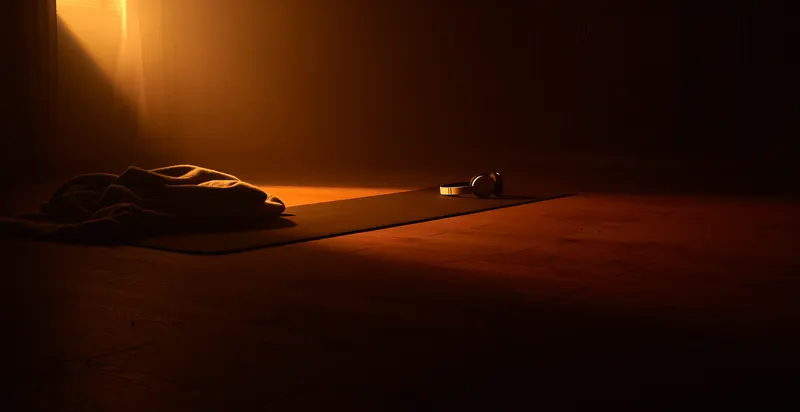
In a properly immersive breathwork session, you lie down, put on headphones and an eye mask, and the session takes you all the way through from start to finish. You do not have to think about what comes next. You do not have to perform for the room. You are fully inside your own experience.
The breath is continuous. The music is custom-built for the session, not background. The arc is designed so what comes up has time to move and what moves has time to settle.
Nothing is left to chance. Every part of the session works together to get you out of your thinking mind and into the part of you that has been holding everything.
Why immersive matters
Stuck emotion does not live in your thoughts. It lives in your body, below the level of conscious awareness.
To reach it, you have to get past the part of your brain that likes to narrate, analyse and keep you safe by staying in control.
Most breathwork does not do this. The room is too bright. The music is incidental. People keep their eyes open. The thinking mind stays online the whole time, quietly managing the experience, deciding how much to feel and when to pull back.
That is not the thinking mind's fault. It is doing its job. But if you want to release what the body is holding, the thinking mind has to step aside.
Immersive breathwork is designed to make that happen. The eye mask removes visual input. The headphones create a private sonic world. The breath pattern shifts your body's chemistry in a way that quiets the thinking part of the brain while leaving the emotional part active.
You drop below the surface. What has been stuck gets a route out.
The difference between background and designed
A lot of breathwork uses music as background. A playlist running in the corner. Something calming to breathe along to.
In immersive breathwork, the music is not background. It is doing as much of the work as the breath.
The soundscape is built from scratch for the session. Frequencies, beats and tones are chosen to drop you out of your thinking mind and into your unconscious, where the stuck emotions actually live. The tempo is matched to the breath. The structure follows the natural arc the body wants to move through.
Music is one of the most direct ways to reach the emotional brain. When it is designed properly, it entrains the body and carries you through phases you would struggle to reach on your own.
That is the difference. Background music accompanies the session. Designed music does the session.
Headphones and eye masks are not optional
Some breathwork classes suggest headphones. Some ask you to close your eyes if you feel comfortable.
In immersive breathwork, headphones and eye masks are part of the method, not a suggestion.
Headphones isolate you sonically. The music becomes your entire auditory world. No sound from the room leaks in. No awareness of who is breathing next to you or how loud they are. Just you and the soundscape.
The eye mask removes the room entirely. You are not tracking the facilitator. You are not aware of the light shifting. You are not managing your facial expression or wondering who might be looking. You disappear into the dark.
Together, headphones and eye mask do one thing: they remove every reason your thinking mind has to stay alert and in charge.
When the thinking mind has nothing left to manage, it steps aside. That is when the body gets to work.
What immersive feels like
In the first few minutes, most people are still aware of the room. The breath feels unfamiliar. The mind is awake and slightly suspicious.
Then the breath starts to shift your body's chemistry. The soundscape builds. The thinking mind begins to fade. You stop tracking time. You stop wondering what is coming next. You are just in it.
Some people cry. Some laugh. Some shake. Some go completely still. The body does what it needs to do, and the thinking mind is not there to talk it out of it.
After the peak, the breath softens, the music shifts, and the body settles. Most people leave feeling lighter, calmer and clearer. Like something has physically moved out of them.
That is what immersive does. It gives the body permission to release what it has been holding, without the thinking mind stepping in to manage the process.
Not all immersive breathwork is the same
The word immersive gets used a lot now. Some breathwork classes call themselves immersive because they dim the lights or play loud music.
That is not enough.
Real immersive breathwork is designed end to end. The breath pattern is specific. The soundscape is custom-built. The arc follows the body's natural release process. The facilitator is trained to hold the room without interfering. The Landing gives the nervous system time to integrate what came up.
Every part works as one piece. Nothing is improvised.
If the session feels like it is being made up as it goes along, or if you spend the whole time aware of the room and the people around you, it is not immersive. It is just breathwork with the lights off.
Why IMD is immersive by design
At IMD, immersive is not a feature. It is the foundation.
Every session is designed to take you completely out of your thinking mind and into your body. The breath is conscious connected breathing, a continuous pattern that shifts your physiology. The soundscape is custom-built by the same person who designed the session. The arc is deliberate. The Landing is 20 minutes of integration, so what moved has time to settle.
Headphones and eye masks are non-negotiable. The room is held by a trained facilitator. You lie down, press play, and the session does the rest.
That is immersive breathwork. Designed in detail. Built to work.