Most breathwork sessions are assembled. Someone chooses a Spotify playlist, writes a script, trains a few facilitators, and calls it a method.
I built IMD the opposite way.
The breath pattern, the soundscape, the session arc, the voice in the headphones, the way the room is held. All designed by one person. Me. Nothing outsourced. Nothing borrowed. Nothing pieced together from other systems.
This is unusual. It takes longer. It costs more. But it's the only way the work stays precise, coherent, and actually does what it says it will do.
My background is design and direction
Before I built IMD, I spent years working as a creative director, film director and choreographer. I worked with Beyoncé, Netflix, the BBC. My job was to design experiences that worked as one piece, where every element served the whole.
When someone watches a film or a live performance, they don't see the lighting as separate from the music, or the choreography as separate from the edit. They feel the whole thing working together.
That training shaped how I approach breathwork.
I couldn't separate the breath from the sound. I couldn't hand the soundscape to a producer and the facilitation to someone else and hope it would land as one experience. The session is designed end to end because that's the only way it works the way I need it to.
The soundscape does as much work as the breath
Most breathwork uses background music. A playlist someone found, or a track someone licensed. It's there to set a mood.
The IMD soundscape is not background. It's doing work.
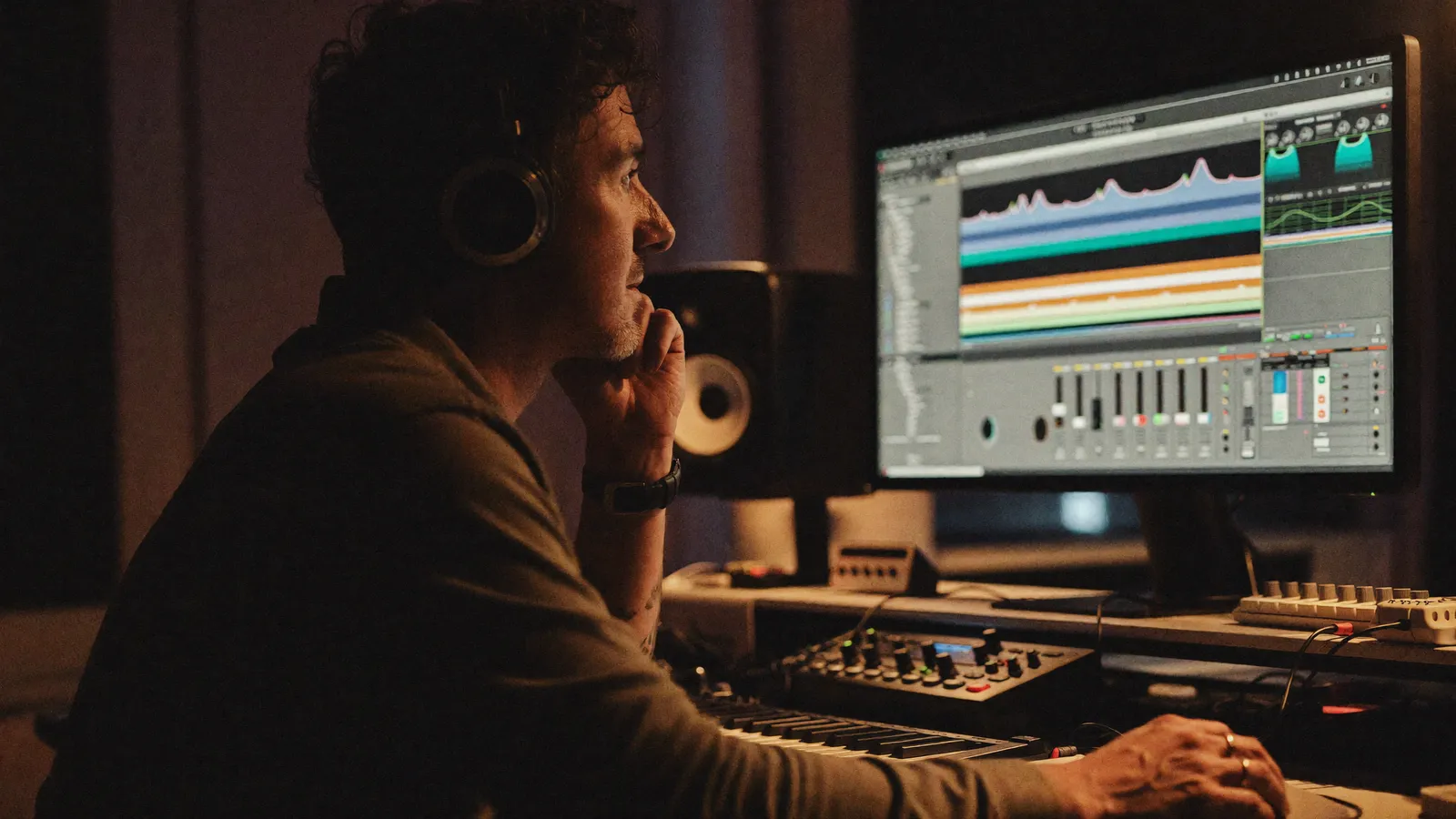
Every track is built from scratch. The tempo is matched to the breath so the rhythm becomes an external pacemaker for the body. The tones, frequencies and beats are chosen to drop you out of your thinking mind and into the unconscious, where the stuck emotion actually lives.
Music is one of the most direct ways to reach the emotional brain. The soundscape isn't decoration. It's structure.
I built it that way because I needed the music to work with the breath, not just sit underneath it. I needed the sound to hold people through the peak, and bring them back down safely. That required designing it myself.
The arc is precise
Every IMD session follows the same progression. Beginning, peak, return. Not because it's a nice structure, but because that's how the body moves through release when it's given the conditions to do so.
The breath builds. The body activates. The stuck emotion surfaces. It moves. The system comes back down. The nervous system rebalances. What came up gets a chance to integrate.
If the music peaks too early, the body hasn't built enough momentum. If it holds too long, people get stuck in activation. If it comes down too fast, there's no time to land.
The arc is designed so what comes up has time to move, and what moves has time to settle. That level of precision only works when one person is controlling all the variables.
The IMD Landing is the most important 20 minutes
What makes a release land, and last, is what happens after the release.
The emotion needs time to finish its arc. The nervous system needs time to return to baseline. The body needs time to learn, on a felt level, that it's safe to feel what it just felt.
That's when integration actually happens. That's what makes the change last.
The IMD Landing is built around this. Twenty minutes of designed stillness, music and gentle guidance. The breath shifts back to natural. The soundscape softens. You're guided through two visualisations that help the body anchor what just moved.
Most breathwork sessions end with a few minutes of quiet and then people leave. The Landing is the opposite. It's deliberate, structured, and it's doing the most important work of the whole session.
I built it that way because the session isn't over when the breath stops. It's over when the body has integrated what came up.
Consistency matters when the work goes deep
When you come to an IMD session in London, Sydney, Los Angeles or Dubai, the session is the same. Same breath. Same soundscape. Same arc. Same voice. Same method.
That consistency matters because the work is deep. People are releasing emotion they've been holding for years. They need to know the structure is solid. They need to trust the person holding the room has been trained in the same method, not improvising or adding their own interpretation.
The only way to keep that level of consistency is to build it once, properly, and train every facilitator to deliver it the same way.
IMD is trauma-informed by design
Every part of the session is designed around safety. The briefing. The contraindications check. The music. The pacing. The way the room is held. The aftercare.
Emotional release without proper safety can re-traumatise people. The structure has to support the body to move through what's coming up without destabilising.
That required designing the whole session with trauma research in mind, not adding safety as an afterthought. The breath pattern, the soundscape, the arc, the Landing. All built to let people go deep without going off the rails.
I built it because no one else had
Before I created IMD, I looked for breathwork that worked this way. Designed end to end. Trauma-informed. Using sound as a structural tool, not decoration. In-person only, because real release work needs a held physical space.
I couldn't find it.
So I built it.
Not because I thought I was special. Because I knew what worked, and I knew how to design it. I had the skills from years of building performances and films where every element had to serve the whole. I knew breathwork could work the same way if it was built properly.
The decision to build every part myself wasn't about control. It was about coherence. The session works because the breath, the soundscape, the arc and the facilitation were designed to work together. Not assembled. Designed.
That's why I built it this way. And that's why it works.