You just finished a breathwork session and something feels off. Your hands are tingling. Your head feels light. You're suddenly emotional for no clear reason. Or you just feel strange in a way you can't name.
Most people don't expect to feel weird afterwards. They expect to feel calm, or clear, or lighter. And many do. But a fair few walk out feeling slightly destabilised, or floaty, or like their body is still trying to catch up with what just happened.
This is normal. It's also worth understanding.
What actually happens to your body during breathwork
During a breathwork session, you breathe in a specific continuous pattern. No pause between inhale and exhale. This is called conscious connected breathing, and it changes your body's chemistry very quickly.
When you breathe this way, carbon dioxide levels in your blood drop faster than usual. Your blood pH shifts slightly towards alkaline. This triggers a cascade of effects. Blood vessels constrict a little. Oxygen delivery to certain parts of the brain changes. Your sympathetic nervous system activates.
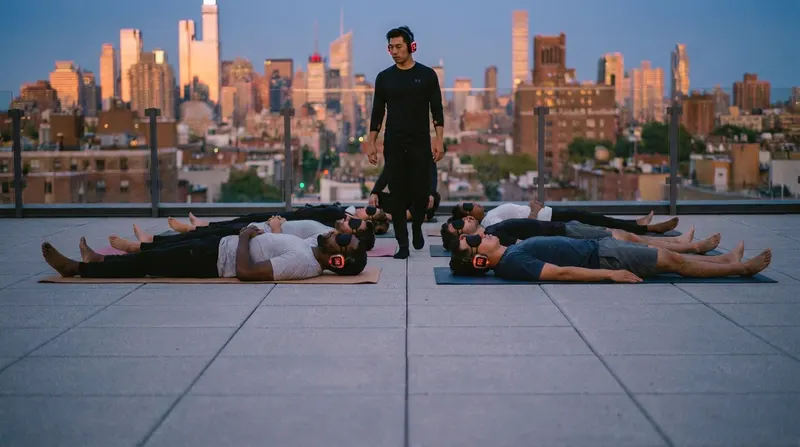
At the same time, you're lying down with headphones on, often with an eye mask, following a soundscape designed to take you out of your thinking mind. Your body is doing real work. Your nervous system is shifting states. Stuck emotion is being given a route out.
All of this is deliberate. But it's also a lot.
The tingling
Tingling in the hands, feet, or around the mouth is one of the most common sensations people feel during and after breathwork. It's caused by that drop in carbon dioxide and the slight alkalosis that follows.
It can feel alarming if you weren't expecting it. Your hands might go numb. Your lips might feel tight. Some people describe it as pins and needles, or a buzzing feeling.
It's not dangerous. It passes. And it's a sign the breath is doing what it's designed to do.
Why it lingers
Sometimes the tingling doesn't fully stop when the session ends. You might still feel it 20 minutes later, or even an hour. This is usually because your breathing hasn't fully returned to its natural rhythm yet, or because your nervous system is still settling from the sympathetic state the session brought you into.
If the tingling lasts longer than a few hours, or if it's accompanied by sharp chest pain or difficulty breathing, get checked. That's rare, but it matters.
The floaty, dissociated feeling
Some people leave a session feeling slightly detached from their body. Not quite present. A little floaty or spacey, like they're watching themselves from a distance.
This is dissociation, and it's the body's protective response to being overwhelmed. Breathwork can bring up a lot, quickly. If your nervous system doesn't feel safe enough to process what came up, it disconnects instead.
Good facilitation and a proper landing at the end of the session are designed to prevent this. The last 20 minutes of every IMD session are about bringing you back down, helping the body integrate what moved, and landing you fully in the room before you leave.
If you still feel floaty afterwards, these help: cold water on your face, stamping your feet on the ground, naming five things you can see, eating something salty or crunchy, speaking out loud to someone. Anything that brings you back into your senses.
The emotional hangover
You might cry during the session. You might laugh. You might feel anger move through your body, or grief that's been stuck for years finally finish its arc.
And then you leave, and the next day you feel flat. Or weepy. Or irritable. Or just not yourself.
This is part of the integration process. The emotion moved, but the nervous system is still recalibrating. Think of it like the day after a hard workout. Your body did real work, and now it's recovering.
For most people, this passes within 24 to 48 hours. You wake up on day three and feel lighter, steadier, more like yourself. That's the resolution landing.
The energised, wired feeling
Some people leave a session feeling pumped. Alert. A bit too awake. They can't sleep that night, or they feel restless in a way that doesn't match how calm they thought they'd feel.
This happens when the sympathetic nervous system (your fight-or-flight response) gets activated during the session and doesn't fully come back down by the end. The breath brought you up, and for whatever reason, your body hasn't dropped back into rest yet.
If this happens, slow your breathing down deliberately before bed. Try a 4-8 breath (inhale for 4 counts, exhale for 8). Box breathing also works. Anything that signals to your body it's safe to come down.
The nausea or dizziness
Some people feel nauseous during or after a session. Others feel dizzy when they stand up, or lightheaded for an hour afterwards.
Nausea can be the body's way of releasing something it couldn't express in another way. Dizziness is usually a blood pressure shift or the lingering effect of altered carbon dioxide levels.
Both usually pass quickly. Drink water. Sit down. Don't rush to stand or leave the space.
If the nausea is severe, or if the dizziness doesn't clear after an hour, that's worth checking.
Why some sessions hit harder than others
You might do breathwork five times and feel fine every time. Then the sixth session leaves you feeling completely destabilised.
This isn't random. What came up in that session was different. Maybe it was deeper. Maybe it touched something older. Maybe your nervous system didn't have the capacity that day to process what surfaced.
The body releases what it's ready to release. Sometimes it underestimates how big the thing actually was.
When weird is a warning
Most of the time, feeling weird after breathwork is normal and temporary. But there are times when it's not.
If you feel completely dissociated for days, if panic attacks start happening when they never did before, if you can't sleep for a week, if the emotional fallout is destabilising your life, something has gone wrong.
This can happen if the session wasn't trauma-informed, if there was no proper facilitation, if the landing was rushed or skipped, or if you did the work alone at home without support.
Breathwork is powerful. Done badly, it can re-traumatise. Done well, it moves what needs to move and lands you safely on the other side.
What helps
If you feel weird after a session, these things help most people come back to baseline: drink water, eat something grounding (not sugar), move your body gently (a walk, not a run), get outside, speak to someone, write it down if words come, or just let yourself rest.
Don't try to think your way out of it. Don't analyse what came up or try to make sense of it immediately. Give your body time to finish the work it started.
Most people feel steadier within 24 hours. If you don't, reach out to the facilitator. A good one will check in.
The difference proper facilitation makes
A lot of the weird feelings people have after breathwork come down to how the session was held.
Was there a briefing at the start? Was the arc of the session designed so things could rise, peak, and come back down? Was there a proper landing at the end, or did the music just stop and everyone stand up? Was the facilitator trained to recognise when someone is dissociating or re-traumatising, and to support them through it?
These details matter. They're the difference between breathwork that moves something real and leaves you grounded, and breathwork that destabilises you for days.
At IMD, every session is designed around these details. The briefing, the contraindications check, the music, the pacing, the facilitation, and especially the landing. The last 20 minutes are there so your nervous system has time to come back down and integrate what moved.
Feeling something during the session is normal. Feeling weird for a bit afterwards is normal. Feeling completely destabilised for days is not, and it's a sign something in the session wasn't held properly.
The work is powerful. That's why the container matters.