Most people can tell you what happened to them. They can recount the story in detail, explain how it changed them, walk you through the sequence of events. They have thought about it, talked about it, written about it, tried to make sense of it.
And they still feel it in their body.
The tightness in the chest that won't shift. The knot in the stomach that shows up when nothing is wrong. The shoulders that climb up no matter how many times you remind yourself to relax. The jaw you only notice is clenched when someone points it out.
Understanding what happened is not the same as moving it out of the body. Insight does real work, but it has a limit. At some point, the thing you are carrying stops living in your head and starts living in your tissue. And when that happens, talking about it can only take you so far.
That is where somatic breathwork comes in.
What somatic means here
Somatic just means of the body. Not abstract, not conceptual, not something you think your way through. When we say somatic breathwork, we mean breathwork that works directly with the body to release what the body is holding.
The breath changes your physiology in a way that gives stuck emotion a route to the surface. You do not have to talk through your story. You do not have to figure out where the feeling came from or why it is still there. You lie down, you breathe, and the body does the work.
This is different from breathwork designed to calm you down or sharpen your focus. Those are real tools with real value. But somatic breathwork is built for a different job. It is built to move what has been stuck for a long time.
Why the body holds what the mind has filed away
Emotions are meant to move through the body in the moment they arise. A child feels fear, the body responds, the fear peaks, the body returns to calm. That is the natural arc. Feel it, move it, done.
But most of us were never given permission to have that natural response in the first place. To cry when we were sad. To get angry when something was unfair. To shake when we were scared. To push back when we were hurt.
So the response froze mid-arc. The body braced for something that never got to finish, and then it stayed braced.
The pattern continues into adulthood. You learn to manage your emotions, think about them, push them down, talk yourself through them. But you do not learn how to feel them all the way through and let them move out of the body.
The anger from years ago. The grief that was never cried. The fear from something that happened when you were too young to make sense of it. The body keeps holding all of it.
This is not metaphorical. Trauma research from people like Bessel van der Kolk and Peter Levine has shown that unprocessed emotion lives in the body, not just in memory or thought. The nervous system stores the response that never got to complete. The muscles hold the tension that never got to release. The breath pattern changes to accommodate a threat that is no longer there.
Your body remembers what your mind has filed away. And it shows up in ways you might not connect to anything specific.
You feel tired in a way that sleep does not fix. You snap at the people closest to you over nothing. You cry at things that do not seem worth crying over, or you feel nothing when you should feel something. You hold your breath without realising. You brace when someone raises their voice, even when they are not angry. You react bigger than the situation calls for, and you do not know why.
Most people do not walk around thinking they are carrying unprocessed emotion. They just know something feels off.
How breath reaches it
Conscious connected breathing is a specific continuous pattern. No pause between inhale and exhale. You breathe in, you breathe out, you breathe in again without stopping.
This shifts your body's chemistry in a way that quiets the thinking part of the brain while leaving the emotional part active. The prefrontal cortex, the part that talks you through things, steps back. The limbic system, where emotion actually lives, comes forward.
Stored emotion gets a route to the surface without you having to think your way to it. And without the thinking mind talking you out of feeling it.
The breath also changes CO2 levels in the blood, which changes how your nervous system behaves. This is not about hyperventilating or forcing the body into panic. It is about shifting the system just enough to let what has been held start to move.
Most somatic breathwork sessions pair the breath with a soundscape. Music is one of the most direct ways to reach the emotional brain. The tempo, tone, and structure carry you through the session. Layered sound, low-frequency tones, rhythm shifts. All of it designed to take you below the thinking mind and into the body.
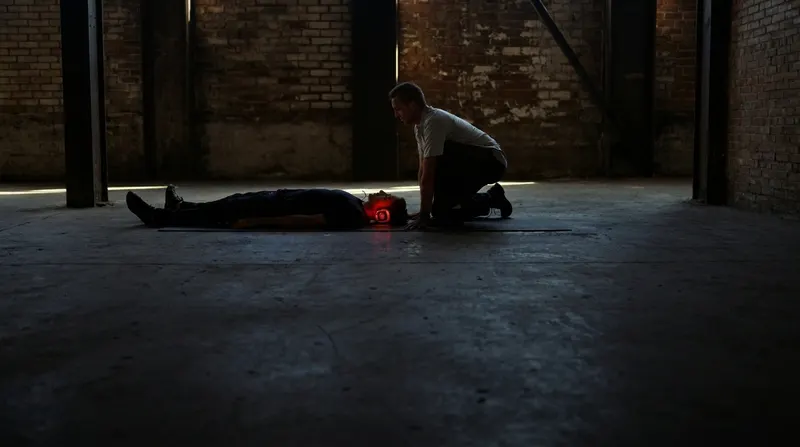
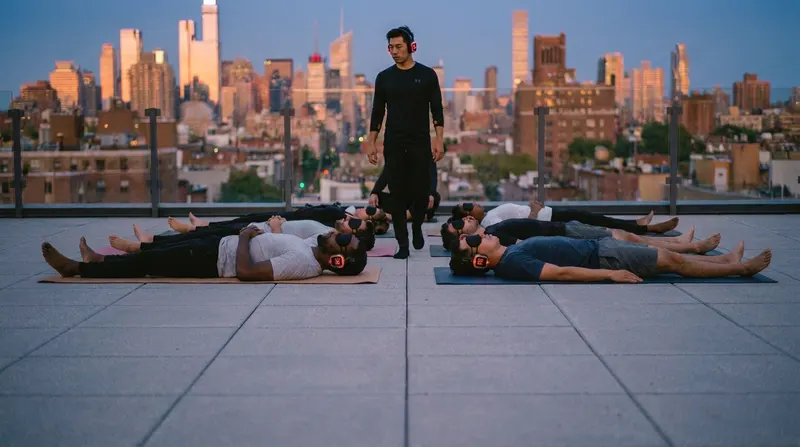
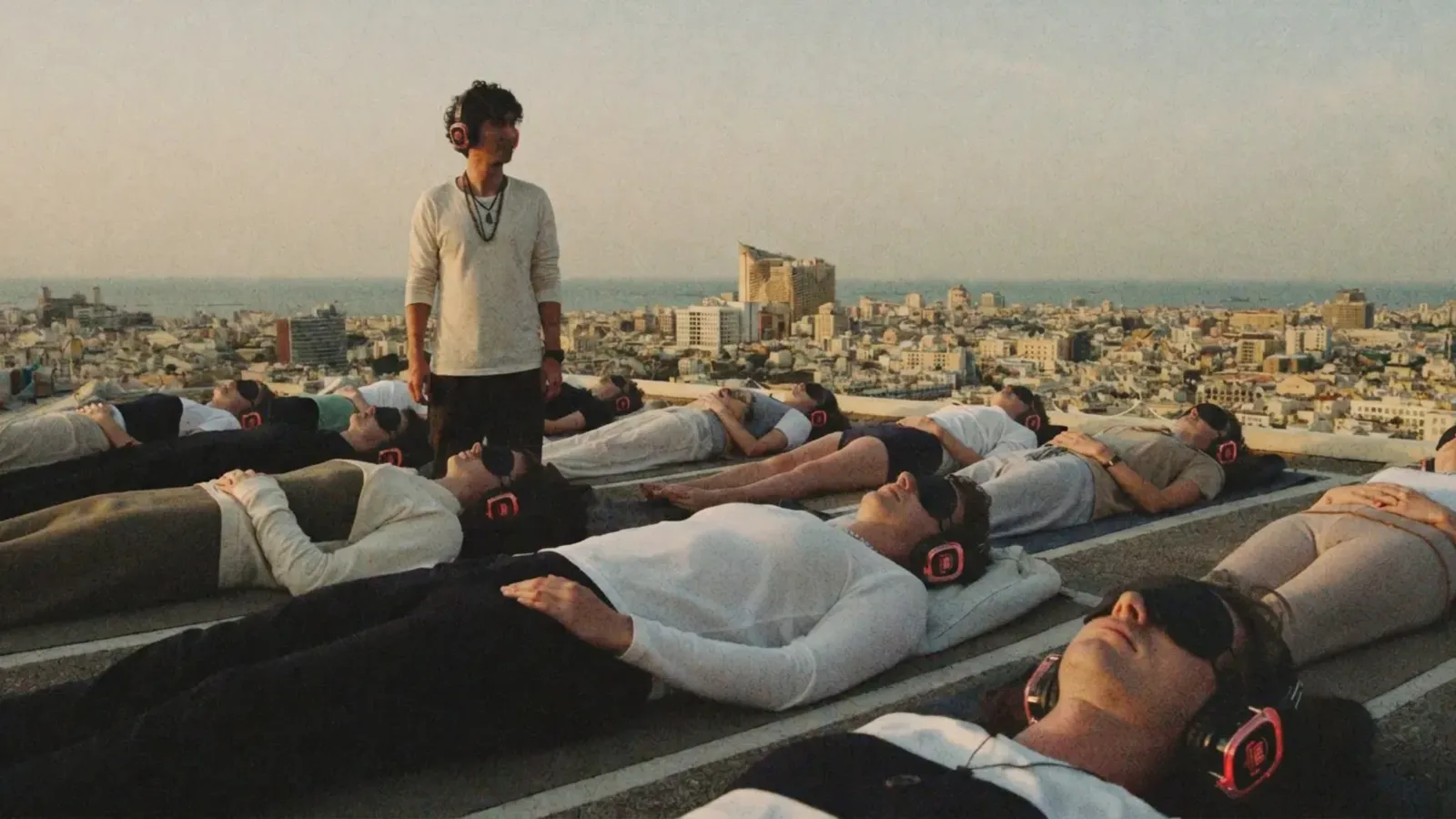
A trained facilitator holds the room. You do not have to figure anything out yourself. You lie down, you put on headphones and an eye mask, and you follow the breath. The facilitator guides the session from start to finish, so you can go deep without having to stay in control.
What happens during a session varies. Some people cry. Some laugh. Some shake. Some feel things move through the chest, the stomach, the throat. Some go quiet. Whatever needs to move, moves.
And then, in the last part of the session, the breath softens. The music shifts. The body comes back down. This is when integration happens. The emotion that surfaced gets a chance to finish its arc. The nervous system learns, on a felt level, that it is safe to feel what it just felt. That is what makes the change last.
What people feel after
Most people leave a somatic breathwork session feeling lighter. Like something has physically moved out of the body. Some describe it as space where there used to be weight.
Calmer. Less reactive. Less braced for something to go wrong.
Clearer. Less mental noise. Easier to think straight. Easier to say what they actually mean.
More connected to their body. Less numb. More present. Able to feel sensations they had not felt in years.
Settled. Breath and heart rate slow. Shoulders down. Jaw unclenched.
Grounded. Steady. The opposite of dissociation.
For some, anger that finishes its arc leaves them feeling stronger. More able to say no, set limits, ask for what they need.
Many people notice their lives shifting in small daily moments in the weeks that follow. Things that used to set them off do not land the same way. The charge comes off. Behaviours that used to feel forced get easier. They feel more like themselves. Closer to who they were before they had to brace, perform, or shut down to get through life.
Somatic breathwork does not replace other work
Therapy, mindfulness, journaling, coaching. These do real work. Many of them save lives. Somatic breathwork is not a replacement for any of it.
But there is another layer underneath the thinking mind. What the body is holding. And to move it, you have to work with the body directly.
Breathwork is one of the most direct ways to do that. Done safely and properly held, it gives the body a way to release what it has been carrying. So it stops directing your life from the background.
That is what somatic breathwork is for. To help the body finish what it started a long time ago. To let the stuck emotion move. To bring you back to yourself.