
Your nervous system doesn't care what you know. It cares what you do.
You can read every book on polyvagal theory, listen to every podcast on trauma, understand the difference between sympathetic and parasympathetic down to the last neuron. Your body will still hold what it holds until you give it a way out.
Regulation techniques work when they meet the body where it is. Some are fast. Some ask almost nothing of you. Some need time and space. Here's what works, ranked by speed and effort.
The instant ones (under 60 seconds, almost no effort)
Cold water on your face. Fill a bowl with cold water and ice. Hold your breath and dunk your face for 15 seconds. This triggers the mammalian dive reflex, which slows your heart rate instantly. Your nervous system switches from fight or flight to conservation mode. It's not soothing, it's mechanical. The body has no choice.
Exhale longer than you inhale. Breathe in for 4, out for 8. Do it three times. The long exhale activates the vagus nerve, which runs from your brainstem to your gut and controls the parasympathetic nervous system. Longer exhale equals calmer body. You can do this standing in a queue, sitting in a meeting, lying in bed at 3am.
Name five things you can see. Out loud or in your head. This pulls you out of the stress response and back into the present. Your thinking brain comes back online. The loop breaks.
The quick ones (5 to 10 minutes, low effort)
Box breathing. Inhale for 4, hold for 4, exhale for 4, hold for 4. Repeat for 5 minutes. This steadies the nervous system by giving it a predictable rhythm. Military units use it before operations. It works because the breath is the one part of the autonomic nervous system you can control directly.
Bilateral stimulation. Tap your knees alternately, left right left right, for a few minutes. Or cross your arms and tap your shoulders. This engages both hemispheres of the brain and helps process stuck activation. Certain therapies use the same principle. You don't need a therapist to tap your own knees.
Shake it out. Stand up and shake your whole body for 60 seconds. Arms, legs, torso, head. Let it be stupid and loose. Animals do this after a threat passes. Humans skip it and wonder why the activation stays stuck. Shaking completes the stress cycle.
The medium ones (20 to 40 minutes, moderate effort)
Slow breathwork sessions. 4:8 breath, box breath, 4:7:8 breath. Lie down, put on headphones, follow a guided session for 40 minutes. This is what the IMD app does. The breath slows everything down. The nervous system gets time to reset properly. You leave calmer than you arrived.
Progressive muscle relaxation. Lie down and tense each muscle group for 5 seconds, then release. Start with your feet, work up to your face. The tension followed by release teaches the body what relaxed actually feels like. Most people are so used to being braced they've forgotten.
Humming or singing. The vagus nerve runs past your vocal cords. Humming, singing, chanting, even gargling all stimulate it. Doesn't matter if you sound good. The vibration does the work. 10 minutes of humming while you cook dinner will settle your system more than scrolling will.
The deep ones (1 to 2 hours, high effort, high return)
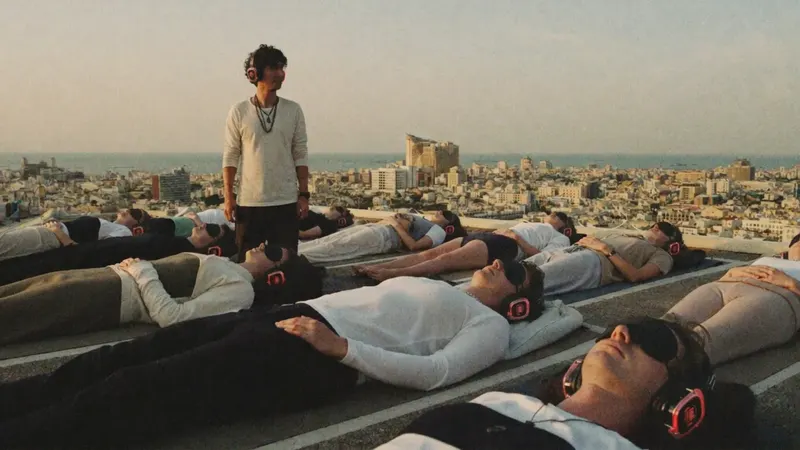
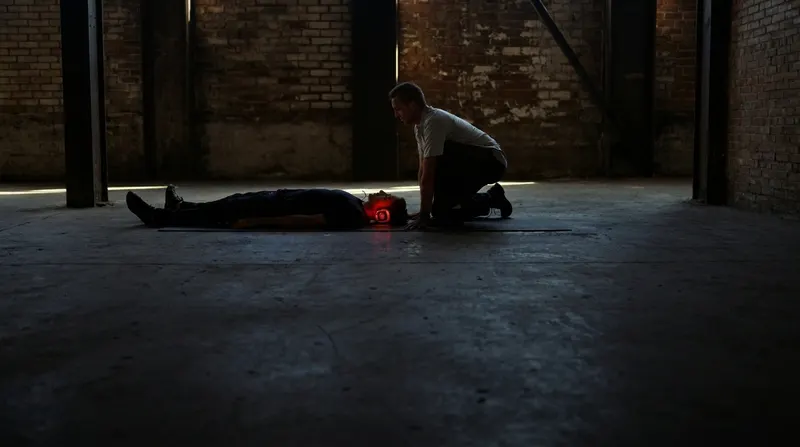
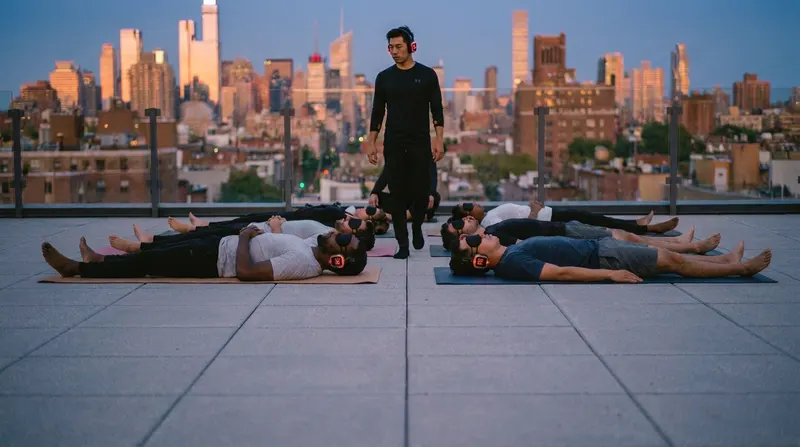
In-person breathwork with a trained facilitator. This is conscious connected breathing in a held space. You lie down, put on headphones and an eye mask, and breathe in a continuous pattern for an hour or more. The breath changes your body's chemistry in a way that lets stuck emotion surface and move. A facilitator holds the room. The soundscape is built for the work. What comes up, comes up. What moves, moves.
This isn't regulation in the sense of calming yourself down after a hard day. This is release work. The body lets go of what it's been holding for years. You leave lighter. Many people describe it as one of the most significant experiences of their life.
It asks more of you than any other technique on this list. It also does something none of the others can.
The ones that work every day (variable time, very low effort)
Morning sunlight. Get outside within an hour of waking. 10 minutes minimum. This sets your circadian rhythm, which regulates cortisol, which regulates your stress response. It's the closest thing to a free reset button.
Move your body. Walk, swim, lift, stretch, dance in your kitchen. Doesn't matter. The body was built to move and it regulates through movement. Sedentary bodies hold more tension.
Eat at regular times. Skipping meals or eating randomly signals threat to the nervous system. Your blood sugar crashes, cortisol spikes, and you feel wired and anxious for no clear reason. Three meals at roughly the same time every day keeps the system steady.
What actually matters
The best technique is the one you'll actually do.
If you're in the middle of a panic attack, dunking your face in ice water will work faster than a 40-minute breath session you don't have time for. If you've been running hot for months, a few rounds of box breathing won't shift it. You need something deeper.
Most people need a mix. Quick tools for daily life. Deeper work for what's underneath.
The mistake is thinking you can regulate your way out of unprocessed emotion. You can't. If the activation has been there for years, it needs a body-based route out. That's what release work does. Everything else helps you manage the day in front of you.
Start where you are. Use what works. If you need help choosing, the IMD app has short sessions for mornings, long ones for evenings, and sound tools for focus. If you're ready to go deeper, the in-person sessions are where the stuck things actually move.