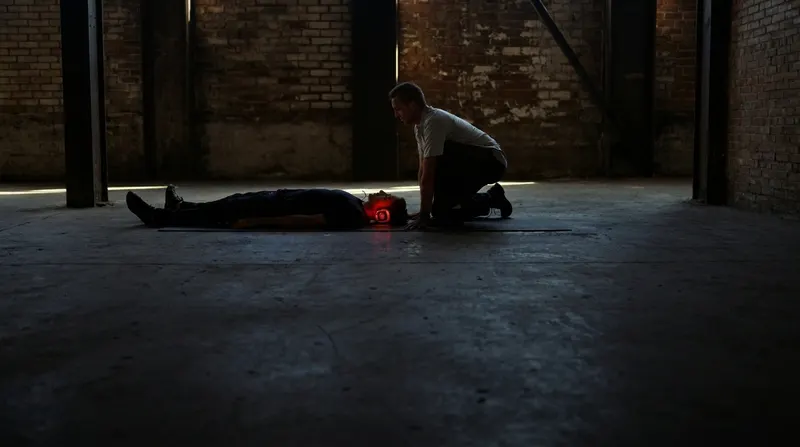

Most people walk out of their first session feeling lighter. Not metaphorically lighter. Physically lighter. Like something has moved out of the body that was taking up space.
That's the first thing people say. The second thing is usually quieter. They feel calmer. Not the floaty, can't-think-straight kind of calm. The opposite. Clearer head, easier to think, easier to say what they mean. Shoulders down. Jaw unclenched. Breath slower. Like the body has finally stopped bracing.
Some people cry during the session. Some laugh. Some shake. Some go completely still. What needs to move, moves. And when it does, the body remembers what it feels like to not carry it anymore.
What happens in the hours after
The session finishes with 20 minutes of stillness. The breath comes back to normal. The music softens. Two visualisations guide you through integration. This is the part most other breathwork skips, and it's the most important. What makes a release last is what happens after the release.
When you stand up, your legs might feel shaky for a minute. That passes. Most people leave the room quiet, not because they're drained, but because they're settled. The usual mental noise has dropped. The constant inner commentary has gone quiet.
In the hours after, people sleep well. Deeper than they have in months. The kind of sleep where you wake up and realise you didn't wake up once.
Some people feel tired the next day. Not ill, just like the body is recovering. Because it is. Emotional release is physical work. The body needs rest after it. That tiredness usually lifts by the second day.
What people notice in the first week
Things that used to set you off don't land the same way. Someone says something that would normally wind you up, and it just doesn't. The charge has come off. You hear it, you register it, and it doesn't hook you.
Your breath is different. You catch yourself breathing deeper, slower, without trying. The tightness in your chest that's been there for years, the one you stopped noticing because it became normal, starts to soften.
Small things feel easier. Sitting through a Sunday dinner with your family without that knot in your stomach. Driving without your heart racing. Watching a film without your mind running five other conversations at the same time.
You might cry more easily. Not in a destabilised way. In a this-actually-needs-to-come-out way. Grief you didn't know you were carrying finds a route to the surface. Anger you've been swallowing for years starts to move. Fear that was too big to feel at the time finally gets space.
What shifts over weeks and months
One session moves something. Regular sessions, over weeks and months, change the baseline.
People who do the work consistently notice their whole nervous system shifts. They're less reactive. Not numb, not detached, just less hair-trigger. The body stops treating every difficult moment like a threat. It starts to remember that it can feel something hard without falling apart.
Old patterns start to loosen. The ones that felt locked in. The need to people-please. The fear of saying no. The automatic apologising for taking up space. These don't disappear overnight, but they start to feel less true. Less like who you are, more like something you learned a long time ago that you don't need anymore.
Relationships shift. Not because you're trying to fix them. Because you're showing up differently. You're less defensive. Less triggered. Better able to say what you actually need instead of swallowing it and resenting the other person later.
The body feels different. Tension you didn't realise you were holding, in your jaw, your shoulders, your hips, your stomach, starts to release. Chronic pain that has no clear medical cause often softens. Gut issues settle. Sleep improves. Energy evens out.
Many people notice they're more present. Not performing presence. Actually there. In the conversation. In the moment. Not running three other timelines in their head while pretending to listen.
What doesn't happen
You don't leave enlightened. You don't have all the answers. You don't suddenly know what to do with your life. Breathwork releases stuck emotion. It doesn't fix your problems. It gives you back the energy you were spending holding everything down, so you have more capacity to deal with what's actually in front of you.
You don't feel high. You don't feel floaty. Some people expect that, because they've heard breathwork described in those terms. IMD doesn't work that way. The session is designed to bring you into your body, not take you out of it. You leave grounded, not dissociated.
You don't need to believe anything for it to work. No spiritual framework required. The breath changes your body's chemistry. The music drops you below the thinking mind. The facilitator holds the room. The body does the rest. It doesn't care what you believe.
What people say months later
The people who stick with it, the ones who come back monthly or every few weeks, describe their lives differently after six months.
They describe feeling more like themselves. Not a new version. The version that was there before they had to shut down, perform, or brace to get through the day.
They describe small moments that used to be hard becoming easy. Saying no without guilt. Asking for what they need without apologising. Sitting with their own feelings without needing to numb, distract, or fix them immediately.
They describe their body as a place they want to be in, not a place they're trying to escape. The constant low-level discomfort that used to hum in the background, the tightness, the heaviness, the numbness, starts to lift. Not all at once. Gradually. And one day they realise it's been weeks since they felt it.
This is what the work does. It gives the body a way to release what it's been holding. And when the body stops holding it, everything else has space to shift.